Where did the idea for an exhibition of flower paintings come from?
The theme of Handpicked is closely related to the house and collection at Kettle’s Yard. Two of the best-loved works in the house are gorgeous flower paintings by Christopher Wood and Winifred Nicholson. When Jim and Helen Ede lived at Kettle’s Yard, they displayed cut flowers in vases around the house – a tradition that is continued today by a group of our Visitor Assistants who use the Edes’ kitchen to store and arrange flowers.
The timeframe ‘1900 to today’ also reflects the period that the Kettle’s Yard collection covers. More broadly we felt that, though it has a reputation as a staid and traditional genre, flower painting can be exciting, expansive and relevant to the contemporary moment.
One of the most interesting parts of curating this exhibition was discovering the stories behind the artworks. Despite the simplicity of the subject, artists have used flowers as a way of conveying poignant messages about their lives and about the world. The paintings are full of joy, life and beauty, but they also capture personal endurance in the face of extreme pain and adversity. From the very start of the process of curating this exhibition we knew that we wanted to convey the rich multiplicity of flower paintings.

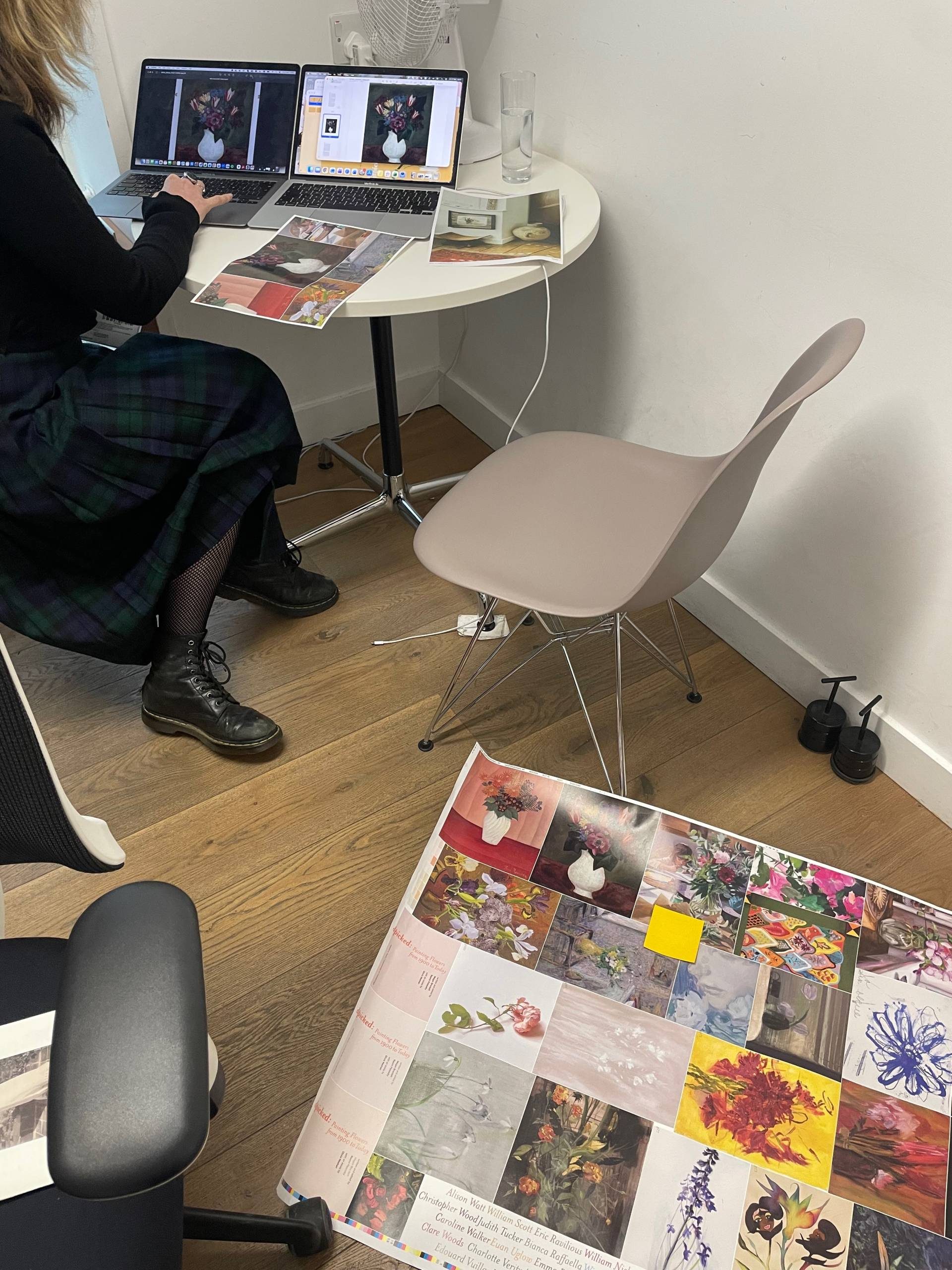
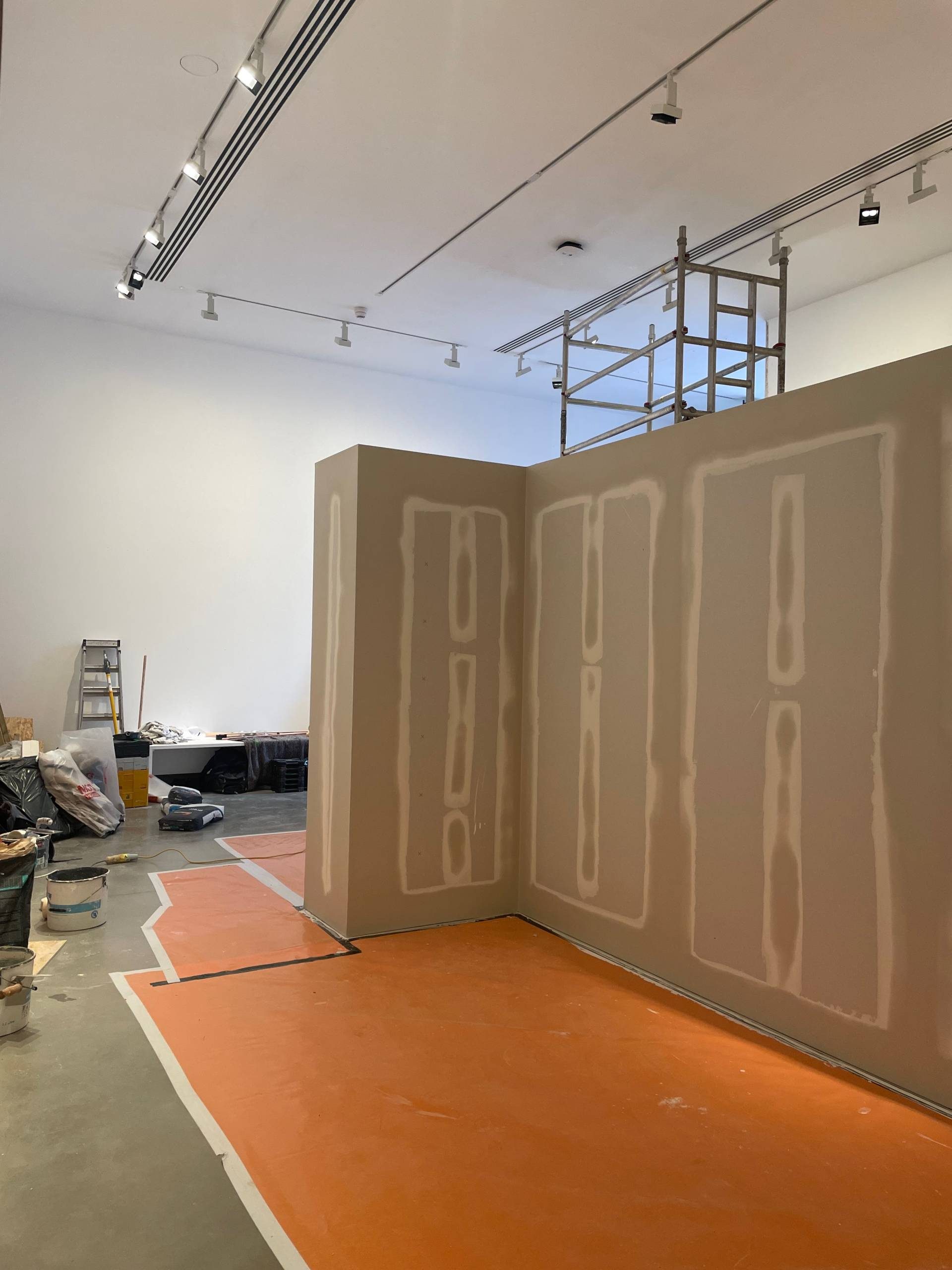
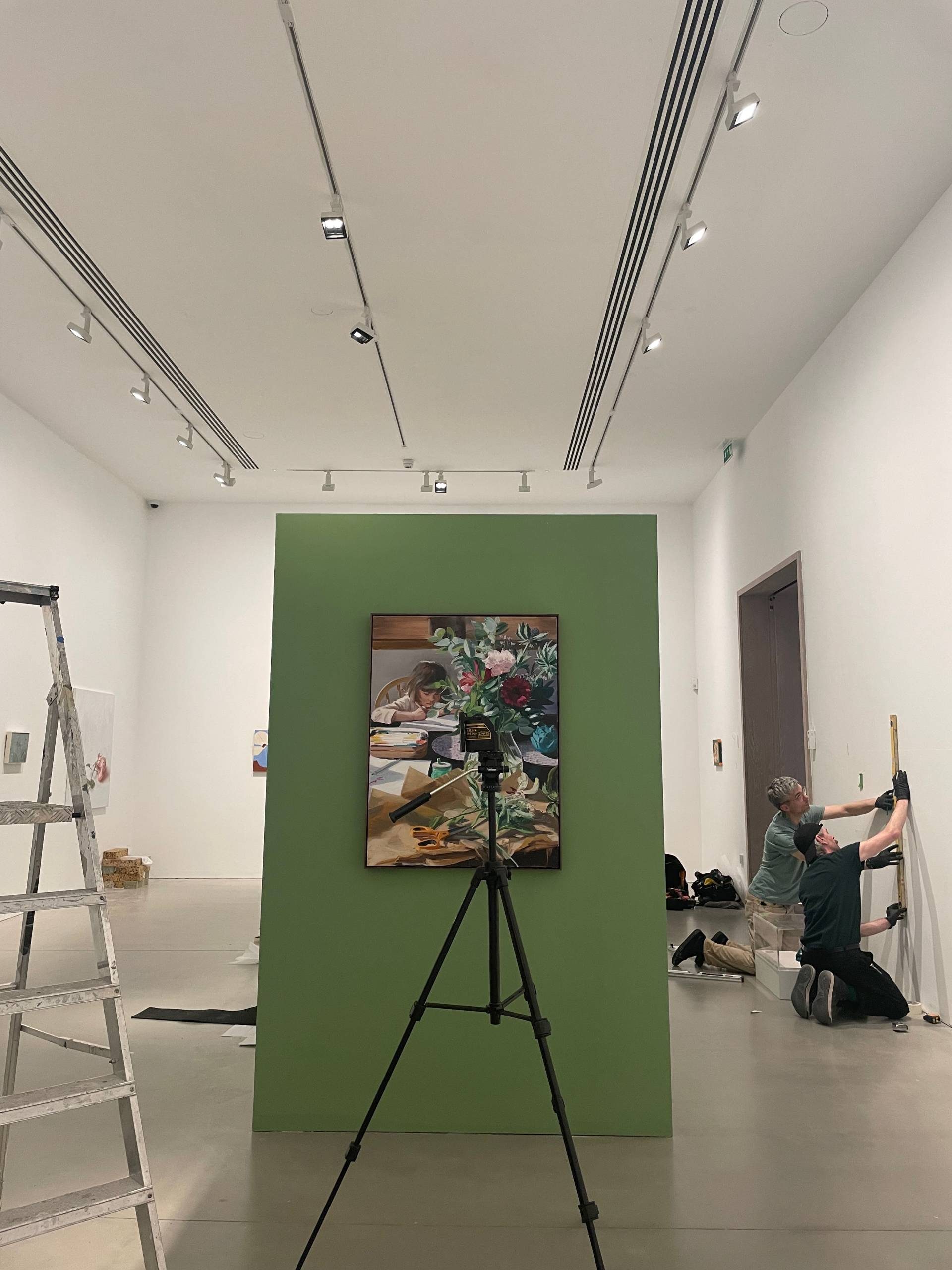
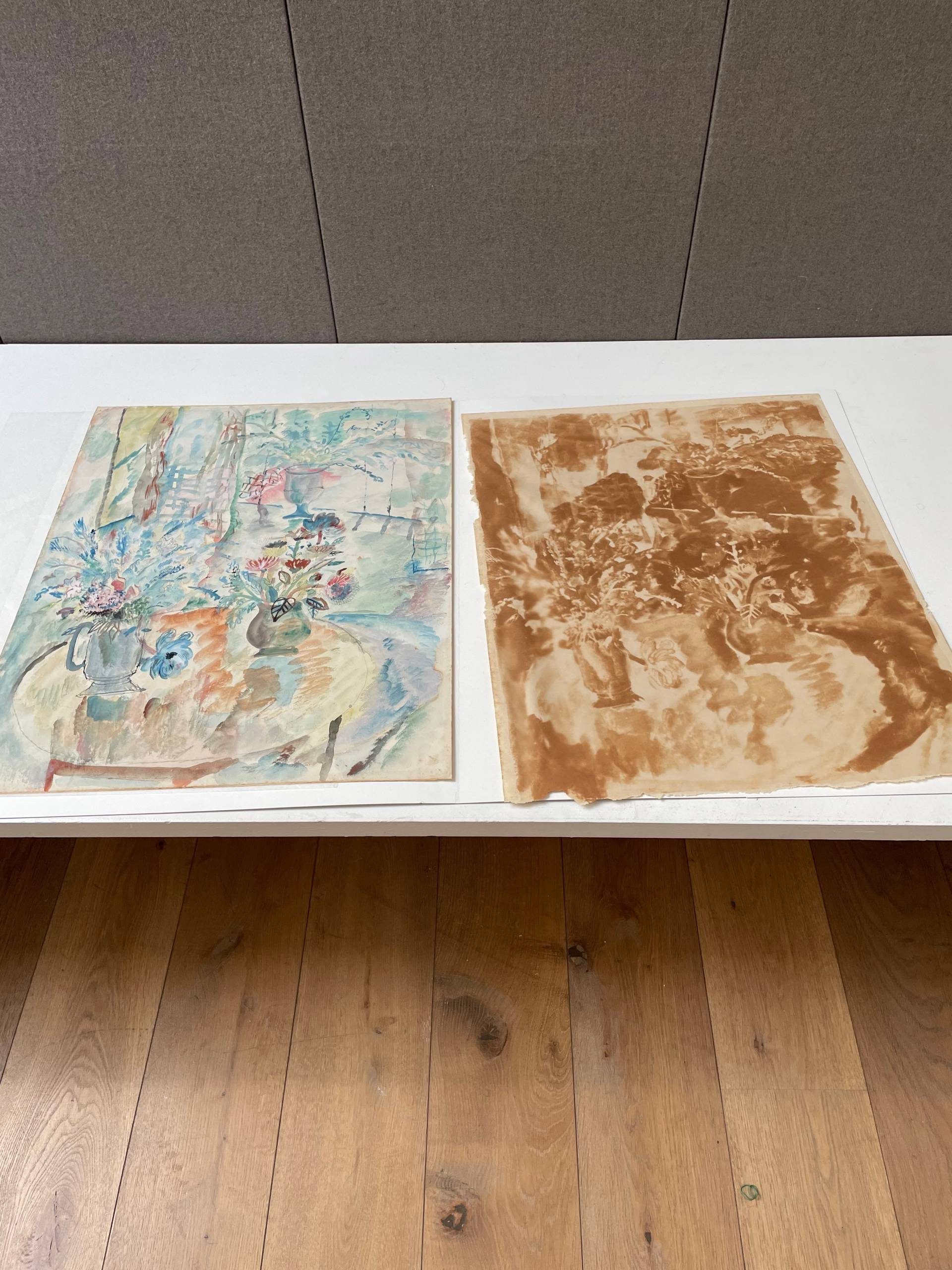
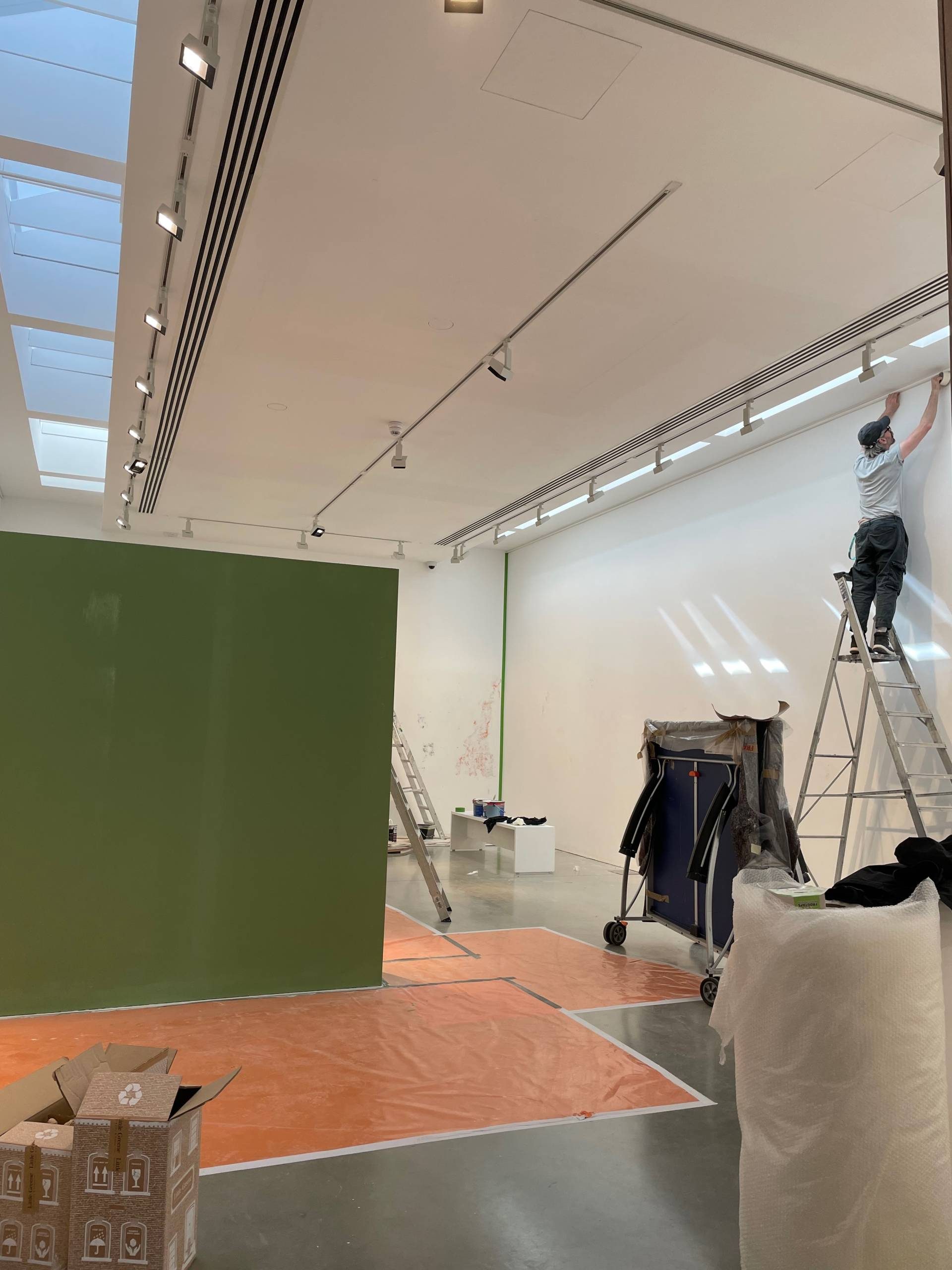
Behind the scenes photos installing the exhibition
How were the Kettle’s Yard Community Panel involved in the exhibition?

Handpicked is the first exhibition at Kettle’s Yard that was curated in close discussion with the Kettle’s Yard Community Panel – a group of seven people living and working in Cambridge who have a passion for the arts. Throughout the two years of its making, we consulted the group on every aspect of the show.
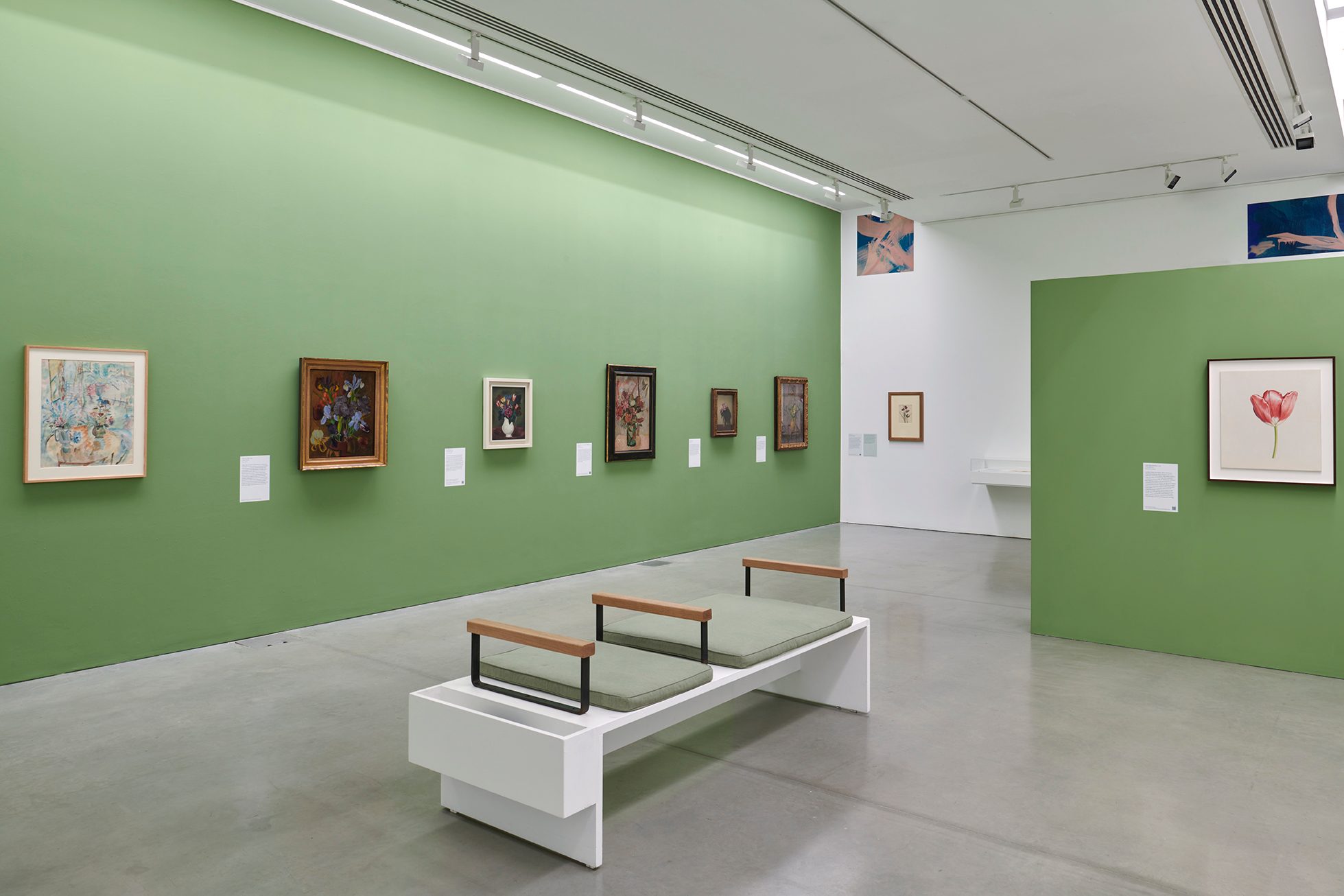
At the start we had long discussions about which artists and artworks to include and went on several research trips to see paintings in person. We also spoke about the hang of the paintings in the galleries and the Community Panel came during the install week to help determine the positioning of certain artworks. Members of the Panel also came up with ideas for how to present the spaces outside the galleries, such as the display of artworks by community groups which guides visitors up to the Research Space.
They wrote wall labels, recorded audio clips and appeared in the exhibition video, giving their personal responses to some of the paintings. And finally, they have taken part in the programme of events during the run of the exhibition. We have loved working with them and feel that this collaboration greatly enriched the exhibition.
What do you want visitors to take away from this exhibition?
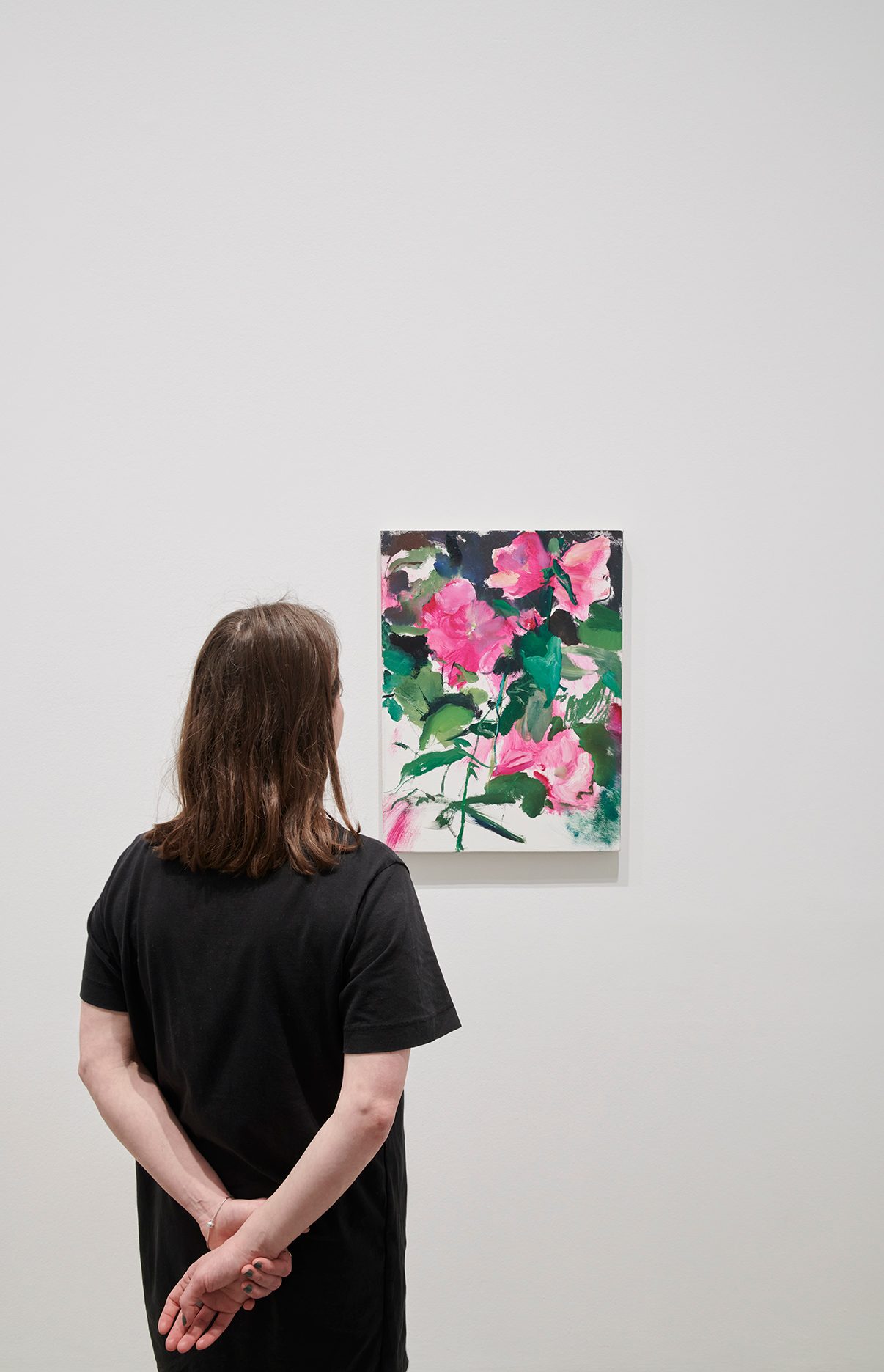
Our intention is for the exhibition to broaden visitors’ understanding of what flower paintings can be, for example through works which are almost entirely abstract or which have surprising meanings. We have included paintings by prominent artists of the twentieth and twenty-first centuries, but also works by some who are less well-known or still at the beginning of their careers, as a way of introducing visitors to artists they may not already be familiar with.
Flowers play such an important part in our lives, marking special occasions and charting the seasons, so we also intended for the exhibition to create moments of personal contemplation. Aside from this, we wanted visitors simply to enjoy the beauty of these paintings: the endless variety of approaches, the intriguing stylistic choices, the witty details.

Do you have a favourite work in the exhibition?

One of my favourite paintings in the exhibition (of many!) is Henri Rousseau’s Bouquet of Flowers (circa 1909-10). Jim Ede always wanted to acquire a Rousseau painting for his collection but never succeeded, so it feels fitting that one of his works should be on display at Kettle’s Yard. I also found a photocopy of another Rousseau flower painting in one of Ben Nicholson’s scrapbooks in the Kettle’s Yard archive, so Nicholson was clearly an admirer of these works too.
The composition of Bouquet of Flowers is so perfectly staged, but also somehow wild and strange. It was the first loan that we secured for the exhibition and it’s also the first painting you encounter as you enter, so it marks a beginning in more ways than one. There are echoes of it in subsequent works in Handpicked, both intentional and not – in paintings by Christopher Wood, Mary Newcomb, Louise Bourgeois and Caroline Walker – so it continues to resonate throughout the exhibition.
Handpicked: Painting Flowers from 1900 to Today is curated by Andrew Nairne with Megan Breckell and Naomi Polonsky.
In discussion with members of the Kettle’s Yard Community Panel: Carol Brown-Leonardi, Jenny Gawthrope-Wood, Eddie Imhagwe, Bryan Johnson, Abi Moore, Jade Pollard-Crowe, Alan Soer.
Handpicked: Painting Flowers
5 Things to Know About the Exhibition